
- Interactive 3D technology
- Use cases
-
Case studies
-
-
- Fashion
- Zegna X
-
- Automotive
- PEI Mobility
- UP Design
-
-
- Resources
- FAQ
- The Company
- Contacts
Sustainable 3D design is the ecological evolution of three-dimensional modeling, integrating principles of environmental, economic and social sustainability into the digital creative process. Unlike traditional 3D design, this approach considers the entire life cycle of the product or building: from the choice of eco-friendly materials, to the optimization of shapes to reduce waste, to end-of-life planning with recycling and reuse strategies. It is like moving from a two-dimensional drawing to a virtual sculpture that has not only volume, but also an environmental conscience.
Fundamental principles of sustainable 3D design
Sustainable 3D design is based on key principles that guide every phase of the creative and technical process. These principles form the backbone of any project that aims to reduce environmental impact through three-dimensional modeling
Material optimization
Sustainable 3D design is based on key principles that guide every phase of the creative and technical process. These principles form the backbone of any project that aims to reduce environmental impact through three-dimensional modeling
Energy efficiency in modeling
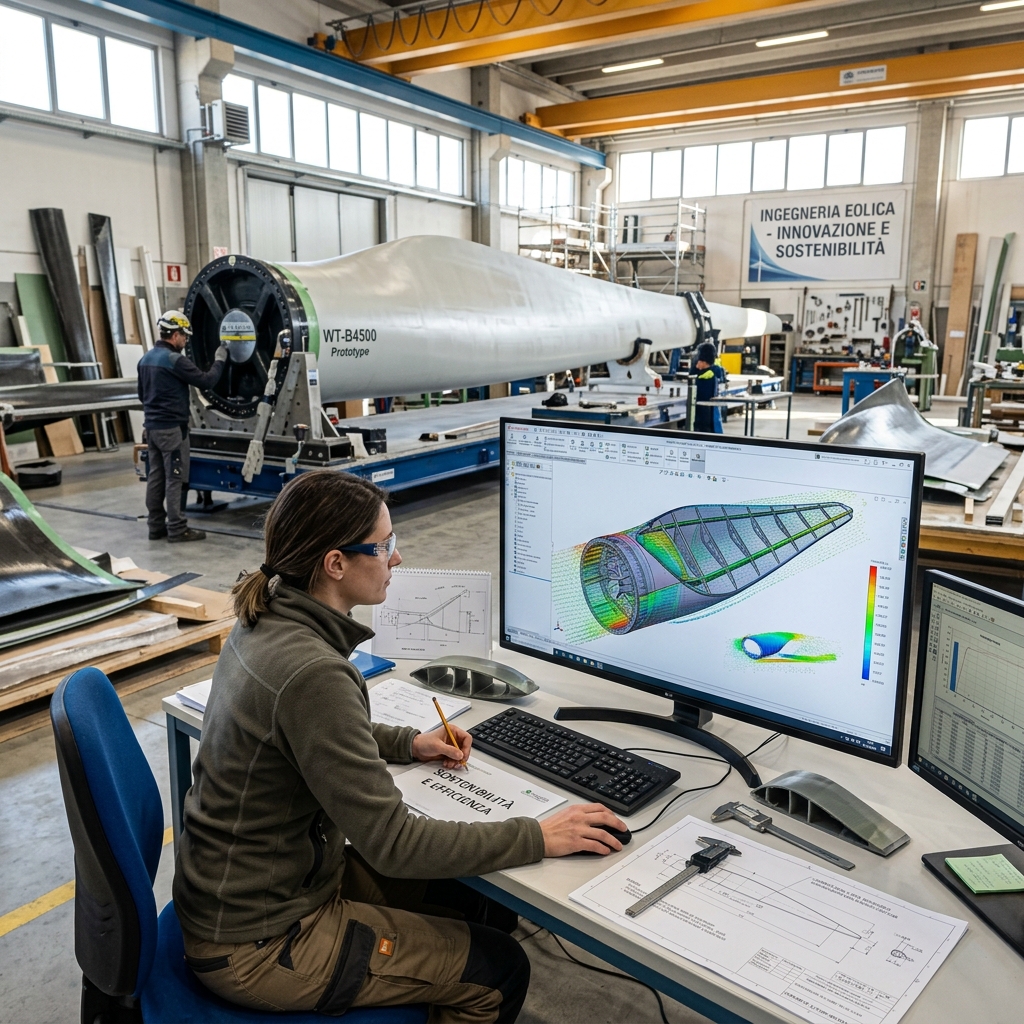
Energy simulation integrated into 3D design processes makes it possible to predict and optimize the thermal behavior and energy consumption of buildings and products. Through computational fluid dynamics (CFD) analysis and thermal simulations, designers can virtually test different solutions, identifying the one with the lowest environmental impact even before building a physical prototype. This process drastically reduces development times and ensures more sustainable results.
Practical applications in the real world
Energy simulation integrated into 3D design processes makes it possible to predict and optimize the thermal behavior and energy consumption of buildings and products. Through computational fluid dynamics (CFD) analysis and thermal simulations, designers can virtually test different solutions, identifying the one with the lowest environmental impact even before building a physical prototype. This process drastically reduces development times and ensures more sustainable results.
Architecture and green building
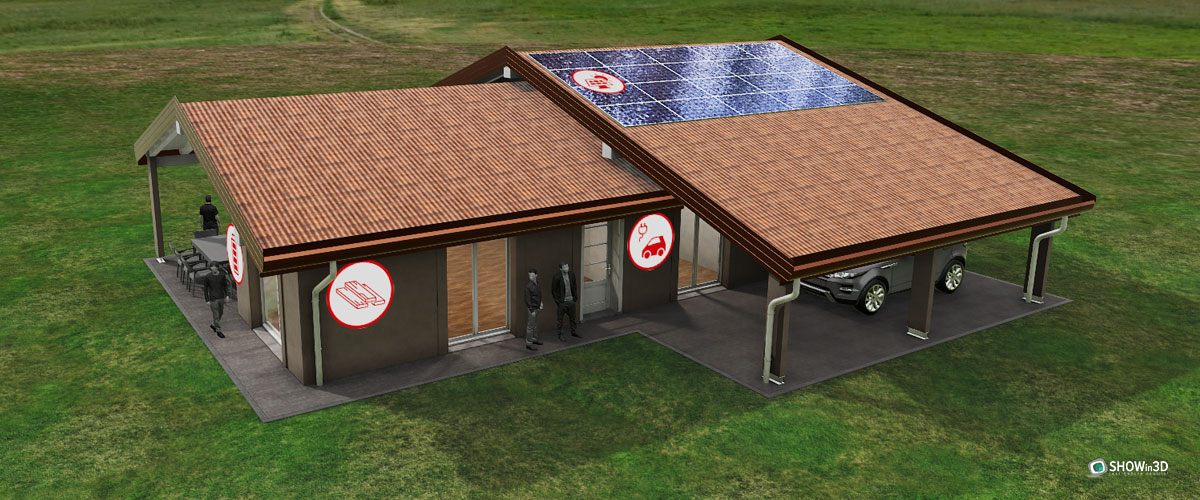
In the construction sector, sustainable 3D design has revolutionized the approach to green building. Architects can now visualize and test eco-friendly buildings, analyzing solar orientation, natural ventilation and integration with the surrounding environment. 3D printing techniques using locally sourced materials, such as local clay, are opening new frontiers in the construction of low-impact homes, reducing transport, waste and energy consumption.
Eco-sustainable product design
In industrial design, sustainable 3D design makes it possible to create products conceived for the circular economy. Through “Design for Disassembly”, objects are designed to be easily disassembled at the end of their life, facilitating the recovery and recycling of components. 3D models make it possible to virtually test the durability and repairability of products, extending their life cycle and reducing the need for frequent replacements.
Innovative technologies and tools
In industrial design, sustainable 3D design makes it possible to create products conceived for the circular economy. Through “Design for Disassembly”, objects are designed to be easily disassembled at the end of their life, facilitating the recovery and recycling of components. 3D models make it possible to virtually test the durability and repairability of products, extending their life cycle and reducing the need for frequent replacements.

Advanced design software
BIM (Building Information Modeling) software represents the cutting edge of sustainable design, integrating information on materials, energy performance and life cycle into a single 3D model. These tools make it possible to calculate the carbon footprint of a project and optimize it in real time, facilitating informed decisions at every stage of the creative process. Integration with databases of eco-friendly materials further simplifies the choice of low-impact solutions.
Sustainable interactive visualization
BIM (Building Information Modeling) software represents the cutting edge of sustainable design, integrating information on materials, energy performance and life cycle into a single 3D model. These tools make it possible to calculate the carbon footprint of a project and optimize it in real time, facilitating informed decisions at every stage of the creative process. Integration with databases of eco-friendly materials further simplifies the choice of low-impact solutions.
Measurable benefits of sustainable 3D design
Adopting a sustainable approach to 3D design offers quantifiable benefits that translate into concrete value for companies, consumers and the environment. These benefits are a strong incentive to implement these methodologies.
Sustainable 3D design enables:
- Up to 30% reduction in material consumption thanks to topology optimization
- Significant reduction in the carbon footprint of products and buildings
- Improved energy efficiency through advanced simulations
- Support for the circular economy with designs conceived for disassembly
- Brand enhancement through a concrete commitment to sustainability
- Early compliance with increasingly stringent environmental regulations
Interactive visualization of these benefits through platforms such as SHOWin3D also makes it possible to communicate the sustainability commitment effectively to customers and stakeholders, turning environmental responsibility into a concrete competitive advantage.
Innovative technologies and tools
- Green building – A construction approach that uses natural materials and low-impact techniques, often supported by sustainable 3D models.
- Eco-friendly 3D printing – An additive manufacturing technology that uses biodegradable or recycled materials to create three-dimensional objects with minimal waste.
- Sustainable BIM – Integration of sustainability parameters into Building models
- Topology optimization – A mathematical process that determines the optimal distribution of material within a defined design space.
- Life cycle assessment (LCA) – Evaluation of the environmental impact of a product throughout all phases of its existence, from production to disposal.