
- Interactive 3D technology
- Use cases
-
Case studies
-
-
- Fashion
- Zegna X
-
- Automotive
- PEI Mobility
- UP Design
-
-
- Resources
- FAQ
- The Company
- Contacts
Applications
Augmented Reality (AR) in the Industrial Sector
The role of industrial AR
Augmented Reality (AR) is taking on an increasingly important role in the industrial sector, revolutionizing the way people work and offering numerous advantages. AR has many uses in the industrial sector, and this technology is transforming safety, efficiency and skills development. SHOWin3D is a platform ready to offer many opportunities to companies that want to enter the world of virtualization.
AR has many uses in the industrial sector, and this technology is transforming safety, efficiency and skills development. Just think of remotely guided maintenance, which lets technicians receive visual instructions in real time directly on the machine they are working on, or immersive staff training, which drastically reduces training times and the risks associated with dangerous operations.

The augmented reality market
Although the concept of the metaverse has not borne much fruit, the technology is advancing and growth in the AR/VR sector is steady. According to Statista, revenue in the augmented and virtual reality market is expected to reach 52 billion dollars by 2027. And if we talk about extended reality (XR see our article), as early as 2026 we exceed 100 billion
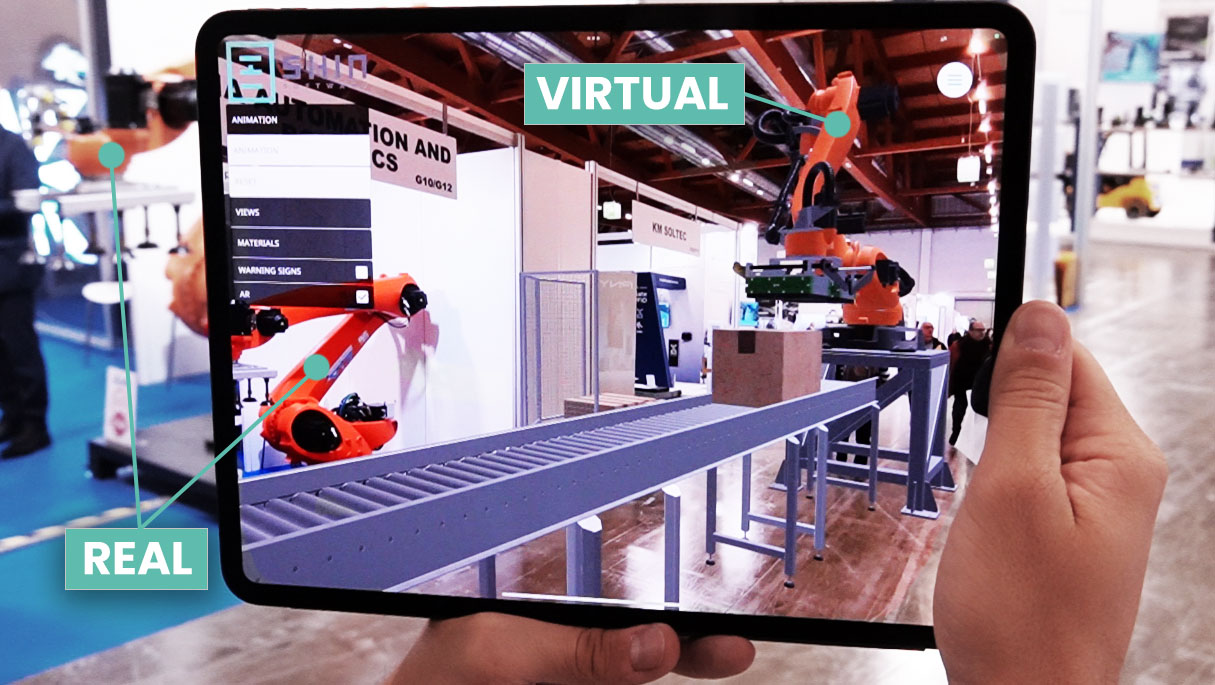
However, there is still a great deal of skepticism among Italian companies about the use of this technology. Many are still trying to figure out what advantages it could bring to their business. Our experience shows us that the initial fear is due to limited knowledge of the technology itself. For example, we could say that if we did not know what a laser is, we would hardly be able to imagine how to use it in our companies. Instead, we all know how useful it is and that its applications are endless, from use in computer mice to precise measurements and even healthcare. Therefore, SHOWin3D does not simply offer a tool, but can help discover new applications of 3D for the specific needs of each company. If you have 3D models of your products, there is certainly room for evolution. Let's look at some of them.
Communicating with customers through augmented reality
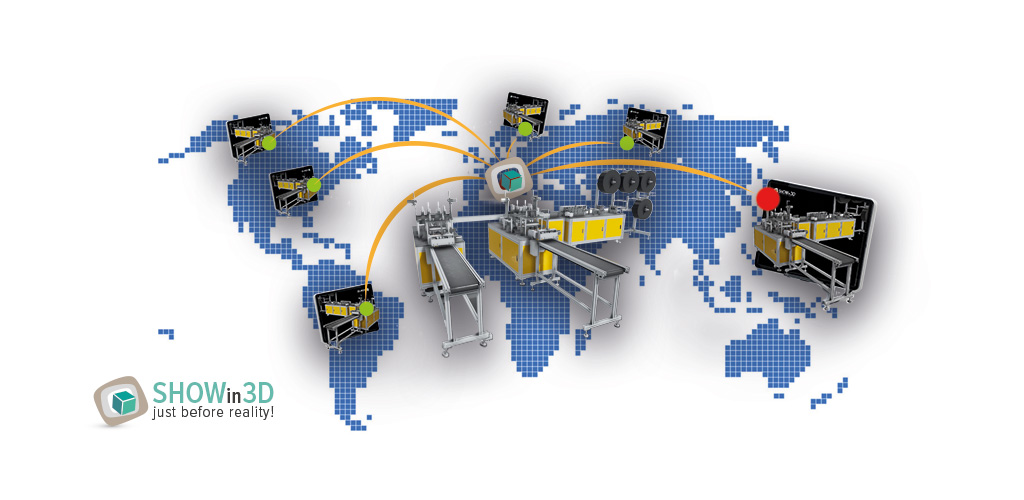
The first approach to augmented reality is certainly customer engagement. It is becoming increasingly important to communicate on an emotional level, both in person and remotely. Here, then, is a first application that can bear fruit: showing a product anywhere in the world without having to ship it and without being limited to a few brochures and photos. Imagine large machines. The cost of transporting them to a trade fair, especially abroad, is so high that companies often limit themselves to a few products. Augmented reality can open up an endless catalog of fully realistic offerings.

AR for Training and Skills Development
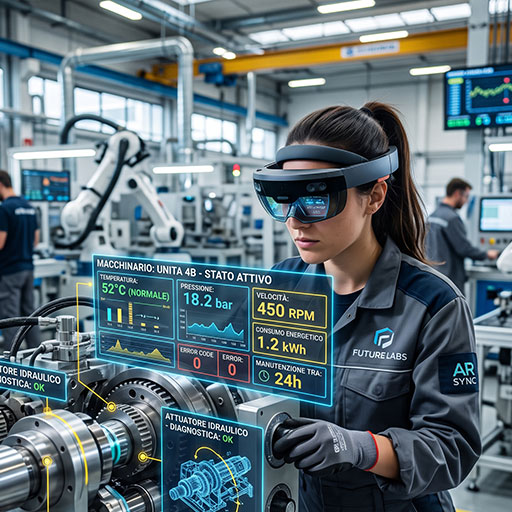
An interesting case study concerns the application of AR in industrial training programs. Thanks to AR, it is possible to create realistic virtual simulations that allow workers to acquire practical skills more effectively. AR also makes it possible to learn in real time, improving productivity and reducing learning times. All this not only in the presence of a trainer, but also remotely, thanks to a virtualization that creates efficiency in terms of both time and resources.
AR generates productivity benefits
because it simplifies workflows
The experiential aspect is certainly what makes learning more intense and training more effective. As Andy Trainor, senior director of Walmart U.S. Academies, put it: “When you watch a module through the headset, it feels like you have actually lived through that situation. We have also seen that training through virtual reality increases employee confidence and retention.”
Augmented reality
in Production Processes
A concrete example of implementing AR in production processes can be found in the automotive industry. Thanks to AR, operators can access real-time information on assembly, quality control and maintenance phases. This technology makes it possible to identify and solve problems promptly, reducing machine downtime and improving overall production efficiency.

Improvements
in Safety with AR
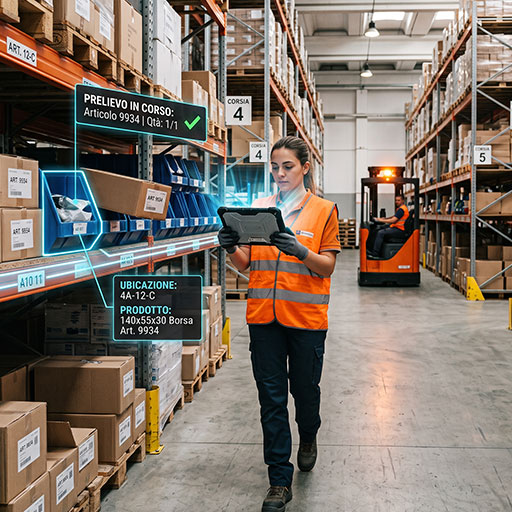
A successful case of AR implementation concerns warehouse management and safety improvement. AR allows workers to view important information directly on wearable devices, reducing the need to consult manuals or use handheld devices during operations. This technology improves workplace safety, reduces accidents and optimizes ergonomics.
Initiatives for diversity, equity and inclusion (DEI)
Augmented reality can also be a social tool. If your company has a Disability Manager, we can discuss their needs with them to find suitable solutions.
Future Developments of AR in the Industrial Sector
AR is constantly evolving and offering new opportunities in the industrial sector. Forecasts for the future point to an even more significant role for AR in industrial operations. For example, AR is expected to be increasingly integrated with artificial intelligence and machine learning, enabling even greater optimization of activities.
As early as 2019, the Gartner CIO Agenda survey – which interviewed more than 3,000 CIOs in 89 countries and across all major industries – found that digital initiatives, together with growth, are the top priorities.
A report by the Capgemini Research Institute shows that companies are using augmented and virtual reality to improve their operations.
Future Developments of AR in the Industrial Sector
AR is revolutionizing the industrial sector, offering significant advantages in terms of safety, efficiency and skills development. This technology is changing the way workers acquire practical skills and is optimizing production processes. With the constant evolution of AR, we can expect an even more promising future for this technology in the industrial sector. Remember: Augmented Reality is here to stay and is opening up new possibilities in the industrial world. Be ready to embrace these changes and seize the opportunities AR offers to improve safety, efficiency and skills development in your industry. Business owners who remain skeptical may one day find themselves forced to implement these technologies.
Keeping pace with competitors would become complicated and expensive. Starting with SHOWin3D lets you approach digitalization gradually and cost-effectively over the long term. Let us remember that new generations already find the use of AR natural. In fact, more than a third (38%) of parents say that their children also use AR technology, with usage ranging from several times a week to every day. The cultural foundation is taking shape: is your company ready?