
- Interactive 3D technology
- Use cases
-
Case studies
-
-
- Fashion
- Zegna X
-
- Automotive
- PEI Mobility
- UP Design
-
-
- Resources
- FAQ
- The Company
- Contacts
Parametric modeling is an advanced approach to computer-aided design that makes it possible to create and manipulate intelligent 3D models through the use of defined parameters and relationships. Unlike traditional modeling, where geometries have fixed dimensions, in parametric modeling every element is defined by editable variables that control dimensions, positions and properties.

This design method stands out for its dynamic nature: when a parameter is changed, all related elements update automatically, keeping the established relationships intact. Thanks to parametric modeling, designers can easily modify their models based on variable parameters, quickly exploring different design solutions without having to rebuild the model from scratch.
The fundamental concept underlying this approach is the preservation of design intent: the model “understands” how it should behave when changes are made, ensuring that the design maintains its consistency and functionality.
How parametric modeling works
In parametric modeling, parameters are the variables that define the behavior of the model. These can include dimensions (length, width, height), material properties, geometric relationships or even performance indicators. Parametric design makes it possible to create complex shapes through algorithms and mathematical relationships, allowing designers to precisely control every aspect of the model.
In parametric modeling, parameters are the variables that define the behavior of the model. These can include dimensions (length, width, height), material properties, geometric relationships or even performance indicators. Parametric design makes it possible to create complex shapes through algorithms and mathematical relationships, allowing designers to precisely control every aspect of the model.

Relationships and constraints: geometric parameterization
The heart of parametric modeling lies in the relationships and constraints that connect the different elements of the model. Geometric parameterization makes it possible to define shapes through editable parameters rather than fixed dimensions. These constraints can be of various types:
- Geometric constraints (parallelism, perpendicularity, tangency)
- Dimensional constraints (distances, angles, radii)
- Symmetry or pattern constraints
- Relative position constraints
When an element is modified, all related elements automatically adapt to respect the established constraints, ensuring the consistency of the model.
The concept of “construction history”
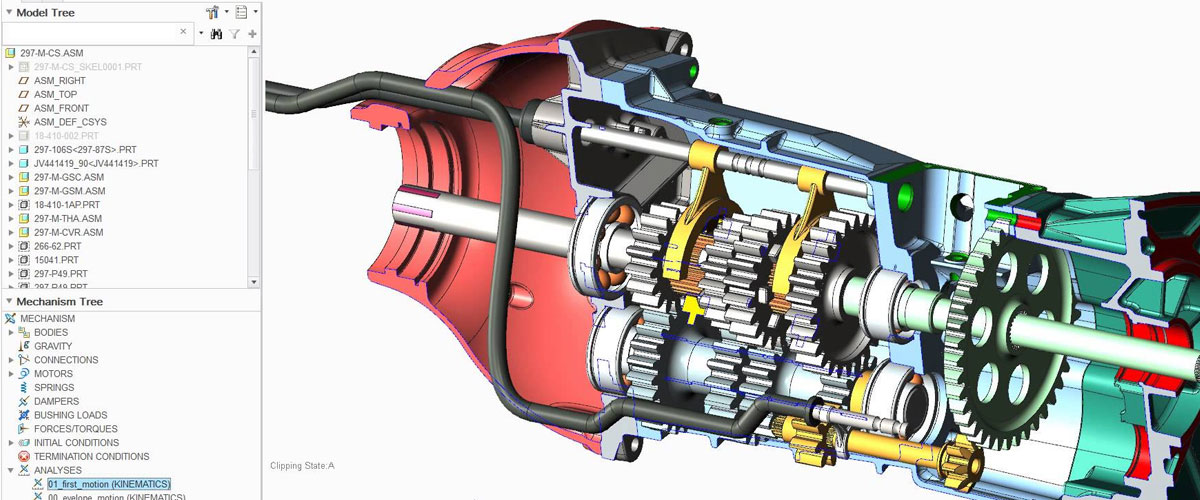
A fundamental aspect of parametric modeling is the “construction history” (tree history), which records the sequence of operations used to create the model. This history makes it possible to go back and modify any step of the design, with the system automatically recalculating all subsequent steps.
With parametric 3D modeling, every element of the model maintains intelligent relationships with the other components, creating an interconnected system that preserves design intent even during substantial changes.
Applications of parametric modeling

Parametric modeling in architecture
The adoption of parametric modeling is revolutionizing several industrial sectors, starting with architecture. In contemporary architecture, parametric design has opened up new aesthetic and functional possibilities, enabling the creation of complex, organic shapes that would have been difficult to achieve with traditional methods.
Parametric BIM integrates detailed information on the materials and performance of building elements, enabling structural, energy and cost analyses in real time. The adoption of parametric BIM significantly improves collaboration among the different professionals involved in a project, from design to construction and building management.
Parametric modeling in industrial design
In industrial design, parametric modeling makes it possible to create product families that share common characteristics but adapt to specific requirements. This approach is particularly useful for:
- Mass customization of products
- Optimization of components for specific performance
- Creation of product variants while maintaining brand identity
- Rapid and iterative prototyping
Through parametric design, it is possible to quickly explore different design variants, accelerating the product development process and reducing prototyping costs.
Parametric modeling in mechanical engineering
In mechanical engineering, parametric modeling offers powerful tools for designing complex components and systems. Engineers can define functional relationships between parts, ensuring that components fit together correctly even when specifications change.
This approach is fundamental for:
- Design of complex mechanical systems
- Topology optimization of components
- Structural analysis and performance simulations
- Management of assemblies with numerous interdependent components
Benefits of parametric modeling
Design flexibility and editability
One of the main benefits of parametric modeling is the flexibility it offers designers. Changes can be made at any stage of the design process, with the system automatically updating the entire model. This makes it possible to:
- Quickly explore design alternatives
- Respond promptly to changes in requirements
- Adapt projects to different conditions or constraints
- Iterate faster toward optimal solutions
Optimization of design time
Parametric modeling drastically reduces design times, especially when it comes to making changes or creating variants of an existing design. Instead of rebuilding the model from scratch, designers can simply modify the relevant parameters and let the system automatically recalculate the geometry.
This approach is particularly advantageous for complex projects or for situations in which requirements change frequently during the development process.
Precision and control of details
Parametric design is based on defining relationships between elements rather than on their fixed geometry, ensuring a higher level of precision and control than traditional methods. Designers can define exactly how each element must behave in relation to the others, ensuring that the design maintains its integrity even during substantial changes.
Related terms
- Generative design: a methodology that uses algorithms to automatically explore design variations based on defined parameters and constraints.
- Digital Twin: a parametric digital representation of a physical object or system, used for simulations and analysis.
- BIM (Building Information Modeling): a process that integrates parametric modeling with detailed information on materials, costs and performance in architecture and construction.
- Parametric prototyping: the process of rapidly creating physical prototypes based on parametric models, often using 3D printing or digital fabrication technologies.
- Topology optimization: a technique that uses parametric algorithms to optimize the distribution of material in a component based on structural and performance constraints.