
- Interactive 3D technology
- Use cases
-
Case studies
-
-
- Fashion
- Zegna X
-
- Automotive
- PEI Mobility
- UP Design
-
-
- Resources
- FAQ
- The Company
- Contacts
Imagine, create, simulate: today all of this happens in a single gesture.
3D simulation is today a fundamental tool that is radically changing the way companies design and develop their products. 3D simulators allow technical teams to virtually anticipate complex operating scenarios, verifying the behavior of systems and components before they are physically built.

Through interactive three-dimensional visualization, every designer can explore materials, physical behaviors and variants, working directly on the shape and characteristics of the product until it fully matches their design requirements.
Created to overcome the limits of traditional design, 3D simulation combines photorealism, dynamic customization and immersive interaction, becoming a strategic tool both for those who design and for those who must make complex technical decisions.
What 3D simulation is and how it transforms design
Virtual simulation makes it possible to test automation scenarios in advance, verifying how systems and components work without building costly physical prototypes. This approach significantly reduces the time needed to bring automated processes into operation and, above all, minimizes errors in the early stages of the project.
A modern 3D simulator effectively supports the development and optimization of robot-based production systems. This technology makes it possible to identify the optimal path before real-world implementation, allowing companies to virtually explore potential issues and avoid costly errors during the physical build phase.
An interactive 3D simulator works on the basis of dynamic three-dimensional models linked to intelligent configuration rules: every change made by the user triggers an immediate update of the model, which adapts visually and technically to the newly set conditions. Every interaction happens in real time, with no delays or slowdowns, ensuring flawless smoothness on both desktop and mobile devices.
Economic and operational benefits of 3D simulation
Economic sustainability is one of the strengths of 3D simulation. Besides reducing the need to build physical prototypes, this technology adds value by avoiding investments in oversized equipment. A concrete example comes from the petrochemical sector, where the use of 3D simulation significantly accelerated the design and production of special expansion vessels intended for high capacity and pressure.
A modern 3D simulator effectively supports the development and optimization of robot-based production systems. This technology makes it possible to identify the optimal path before real-world implementation, allowing companies to virtually explore potential issues and avoid costly errors during the physical build phase.
Digital data continuity is another key advantage. Design teams can carry out the in-silico checks and simulations needed to tackle geometric problems in complex components, analyzing elasticity, pressure resistance and other critical characteristics. This method not only compresses development times but systematically eliminates design errors before they can negatively affect final production.
The concrete benefits are many:
-
Improved design efficiency
The ability to interact with products in 3D, modify them and view every change in real time makes the design process more intuitive, engaging and precise.
-
Significant reduction in development costs
A simulation-based approach facilitates technical decisions, reducing evaluation times and increasing precision in both the design and the production phases. -
Elimination of errors in the early stages
The configuration rules built into 3D simulations prevent invalid combinations or design errors, reducing issues, revisions and post-production costs.
How a modern 3D simulator works
Modern technical design increasingly uses 3D simulation as a strategic tool to solve complex problems before physical production. This approach makes it possible to virtually verify the behavior of systems in a realistic and detailed way, optimizing both resources and development times.
Unlike traditional 2D design methods, which offer experiences limited to static views or combinations of predefined images, the 3D simulator lets the user explore every angle of the product, rotate it, zoom in and change materials, physical behaviors and details in real time, gaining a precise and engaging view of the final result.
Thanks to photorealistic rendering and smooth variant management, 3D simulation turns the design process into an intuitive, immersive experience that integrates seamlessly with digital platforms, business systems and collaboration tools.
Practical applications of 3D simulations
The evolution of 3D simulations has made it possible to apply them in ever broader and more diverse contexts, offering concrete benefits in numerous sectors.

-
Industrial 3D simulation:
in manufacturing, three-dimensional simulations make it possible to digitally replicate entire production processes before their physical implementation. This approach makes it possible to identify bottlenecks, optimize workflows and accurately predict production times. The ability to virtually test materials, structural strength and physical behaviors has drastically reduced the costs of non-functional physical prototypes, significantly shortening the product development cycle.
-
Interior furnishing simulation software:
interior architecture benefits from 3D simulations through tools that faithfully recreate the physical behavior of light, material properties and spatial proportions. This software makes it possible to analyze the ergonomics of spaces, movement flows and the psychological impact of color choices. Simulating lighting conditions at different times of day and seasons of the year enables design decisions based on objective data, overcoming the limitations of traditional static representation.
-
Bathroom simulation:
bathrooms, with their specific plumbing and system complexities, find in 3D simulations an essential tool for checking technical issues in advance. These systems make it possible to simulate water flows, ventilation, and the thermal and acoustic behavior of the space. Virtual analysis of humidity and potential condensation helps prevent future problems, while accessibility checks ensure spaces that can be used by all categories of users, including people with reduced mobility.
-
Kitchen simulation:
the kitchen, the nerve center of the contemporary home, is reproduced virtually with simulations that combine functional workflow analysis, ergonomic checks and thermodynamic studies. These tools make it possible to calculate travel times between the different functional areas, analyze the distribution of heat generated by appliances and test the effectiveness of ventilation systems. Simulating daily usage cycles identifies spatial inefficiencies before construction, drastically reducing changes during the execution phase.
-
Virtual spaces:
simulating complex environments such as museums, hospitals or airports makes it possible to analyze behavioral dynamics, people flows and evacuation scenarios in advance. These virtual models incorporate artificial intelligence algorithms that reproduce realistic human behavior under different conditions, making it possible to optimize layouts, signage and safety systems. The ability to simulate specific events makes it possible to test the resilience of facilities in critical situations without real operational disruptions.
-
3D street furniture:
urban planning uses three-dimensional simulations to study the microclimatic impact of proposed interventions. These tools analyze cast shadows, wind corridors, heat buildup and energy losses, enabling decisions based on objective scientific data. Simulating seasonal scenarios and variable weather conditions makes it possible to verify the effectiveness of the proposed solutions throughout the entire annual cycle, significantly improving the sustainability of urban interventions.
-
3D packaging simulations:
the packaging industry uses advanced simulations to test structural strength, behavior during transport and the preservation of the products inside. These systems make it possible to simulate variable humidity, temperature and pressure conditions, verifying the integrity of materials in realistic scenarios. The ability to calculate the environmental footprint and optimize the ratio between material used and protection offered has transformed the industry’s approach to sustainability, significantly reducing waste.
-
3D simulations for modular products:
modular systems are tested virtually through simulations that verify their structural stability, load resistance and behavior under external stresses. These tools make it possible to analyze thousands of possible configurations, automatically identifying the critical points of each solution. The integration of finite element analysis makes it possible to optimize components by reducing material without compromising performance, with measurable economic and environmental benefits.
-
3D simulations for home appliances:
the development of modern home appliances relies on simulations that reproduce thermal, acoustic and electromagnetic behavior. These virtual systems make it possible to test energy efficiency, heat distribution, vibration and noise in different usage scenarios. The simulation of airflows and fluid dynamics has revolutionized the design of cooling and cooking systems, optimizing performance and energy consumption at the same time.
-
Rendering for interactive catalogs:
advanced digital catalogs integrate physical simulations that make it possible to display realistic material behavior in response to user interactions. These systems faithfully reproduce the deformation of fabrics, the behavior of light on complex surfaces and the physical properties of materials. The ability to simulate the aging and wear of products over time offers unprecedented transparency on the aesthetic and functional evolution of objects, supporting more informed purchasing choices.
3D simulations have transcended the role of simple visual tools to become true virtual testing environments, where physics, mathematics and design merge to optimize every aspect of the material world before it is built, reducing the risks, costs and environmental impact of production processes.
Advanced simulation technologies
Developing a truly effective 3D simulation requires much more than a simple visual representation. Modern technologies take the simulation experience to a higher level, integrating advanced features designed to deliver high performance, maximum precision and seamless integration into corporate digital workflows.
The evolution of 3D simulation software has led to the integration of increasingly sophisticated features:
-
Finite element analysis
It makes it possible to evaluate the structural strength and behavior under stress of complex components and systems. This technology enabled an Italian company to reduce structural failures in its products by 40%. -
Fluid dynamics simulations
It makes it possible to study the behavior of liquids and gases inside and outside structures and components. A valve manufacturer optimized internal flows, increasing efficiency by 22%. -
Thermal analysis
It predicts heat distribution and the thermal behavior of materials under different operating conditions. This feature made it possible to reduce overheating in precision electronic components by 30%. -
Multiphysics simulations
It combines different physical phenomena in a single model for a more realistic and complete representation. An Italian aerospace company uses this technology to simultaneously simulate mechanical, thermal and electromagnetic stresses.
Visual quality is the first element that captures the user’s attention and determines the success of a simulation experience. Modern 3D simulation systems offer uncompromising photorealistic rendering, capable of reproducing materials, finishes, lights and shadows with extraordinary precision.
SHOWin3D: excellence in interactive 3D simulation
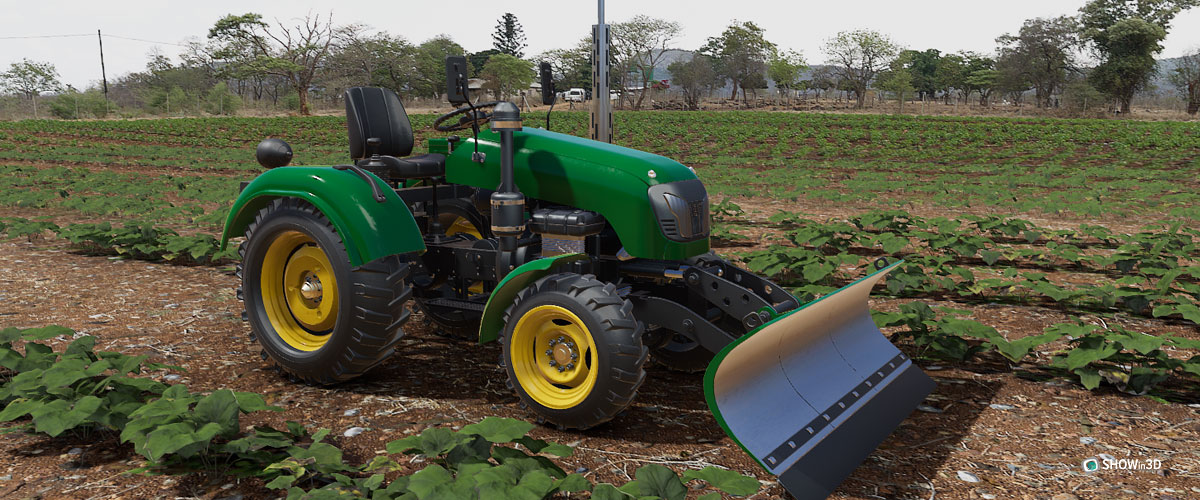
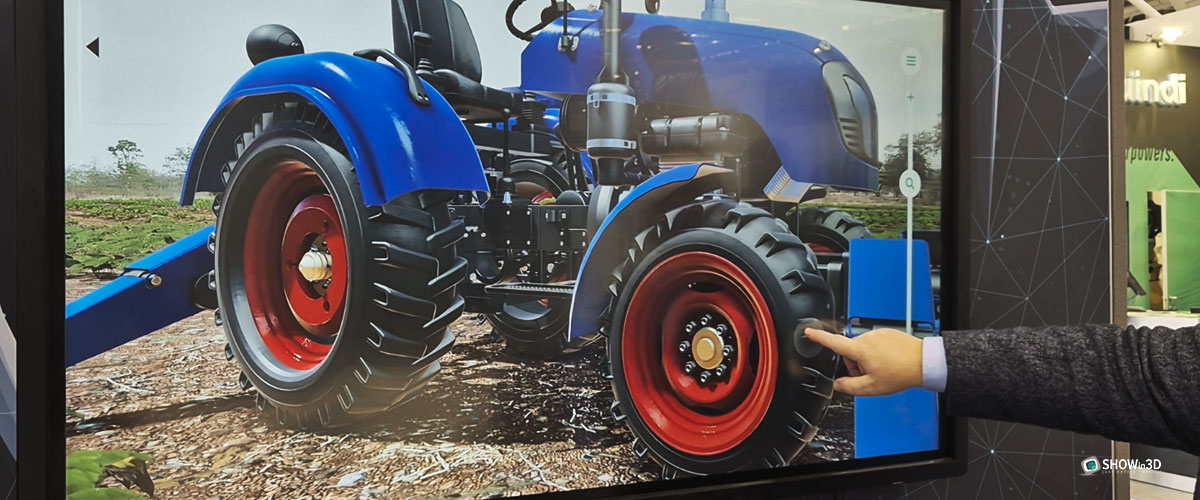
Shin Software has revolutionized the world of interactive 3D simulation with SHOWin3D, a cutting-edge platform that makes it possible to create engaging virtual experiences without requiring programming skills. SHOWin3D stands out for its ability to combine ease of use and advanced performance, making the technology accessible to a wider audience.
The SHOWin3D platform offers:
-
Photorealistic ultra HD rendering
Every detail is reproduced with microscopic precision, creating a visual experience that comes close to reality. Materials, textures and finishes are displayed with surprising fidelity, enabling more accurate design decisions. -
Visual editor with no coding required
Unlike other solutions that require advanced technical skills, SHOWin3D makes it possible to create complex simulations through an intuitive interface. This democratizes access to the technology, allowing even non-technical teams to take advantage of its benefits. -
Cloud-native architecture for global distribution
Simulations created with SHOWin3D can be distributed and accessed from anywhere in the world, facilitating collaboration between distributed teams and interaction with international customers. -
Full support for virtual and augmented reality
The SHOWin3D 3D simulation is not limited to traditional visualization, but opens the door to immersive experiences thanks to native support for augmented reality (AR) and virtual reality (VR). Through augmented reality, users can place the simulated product directly in their own real space, viewing it on a smartphone or tablet with surprising precision.
The impact of SHOWin3D on business is measurable and significant:
- 22% reduction in return requests
- 11-fold increase in purchase intent
- Management of over 46 billion possible configurations in real time
As one customer confirms:
I have been using SHOWin3D for 3 years and it is an extraordinary software tool for creating 3D spaces. I have used it to showcase my clients’ products both on desktop and in app/AR, simply wonderful. I have never had any technical problems and the support is exceptional
Optimizing processes with industrial 3D simulation
-
Verify the efficiency of production layouts
Before physically moving machinery and equipment, it is possible to test different virtual configurations to identify the optimal one. A company in the mechanical sector saved €120,000 by avoiding unnecessary physical modifications. -
Optimize robot and operator paths
Simulation makes it possible to analyze and improve movements within the production space, reducing downtime and increasing productivity. A Shin Software customer increased operational efficiency by 18% thanks to this feature. -
Train staff in a virtual environment
Operators can be trained in a safe virtual environment before working on real machines, reducing risks and learning times. This approach reduced accidents during training by 40% at a major Italian company. -
Test predictive maintenance scenarios
The 3D simulation makes it possible to predict when and where failures or inefficiencies might occur, enabling targeted preventive interventions. A company in the energy sector reduced downtime by 35% thanks to this predictive capability.
Integrating industrial 3D simulation into business processes means not only offering customers an advanced experience, but also optimizing internal efficiency and commercial results.
The future of 3D simulations
3D simulations are evolving rapidly, integrating emerging technologies that further amplify their potential:

-
Artificial intelligence for automatic optimization
AI algorithms can analyze thousands of variables simultaneously to suggest optimal configurations that a human designer might not identify. Shin Software is integrating these capabilities into SHOWin3D, enabling predictive optimization based on historical data. -
Virtual and augmented reality for immersive experiences
The ability to “step into” the simulation through VR headsets or overlay virtual elements on the real world through AR is transforming the way we interact with 3D models. A Shin Software customer increased visitor engagement at trade shows by 70% thanks to these technologies. -
Cloud computing for distributed complex calculations
Cloud processing makes it possible to run extremely complex simulations without requiring powerful local hardware, democratizing access to these technologies. SHOWin3D leverages this architecture to ensure high performance on any device. -
Digital Twin for continuous monitoring
The concept of the digital twin represents the natural evolution of 3D simulation toward a complete virtual replica of the physical product, constantly updated with data from real sensors. An Italian manufacturing company reduced downtime by 45% thanks to this technology.
The Italian strategic plan for Industry 4.0 provides for significant investments in these technologies, recognizing their crucial role in the competitiveness of Italian companies on global markets.
Competitive advantages of SHOWin3D 3D simulation
Adopting Shin Software’s SHOWin3D 3D simulation means building a real, measurable competitive advantage. Companies that have implemented this solution report:
-
40% reduction in product development times
The ability to iterate quickly on designs without creating physical prototypes drastically accelerates the development cycle. A company in the furniture sector cut the time needed to bring new products to market from 8 to 3 months. -
35% increase in sales conversions
Letting customers view and customize products in 3D significantly increases purchase intent. A custom kitchen manufacturer recorded a 35% increase in conversion rate after implementing SHOWin3D. -
25% reduction in prototyping costs
By virtually testing product variants, companies drastically reduce the need to create costly physical prototypes. A customer in the automotive sector saved over €200,000 per year in prototyping costs. -
50% improvement in collaboration between teams
The ability to share and modify 3D models in real time between geographically distributed teams is a further competitive advantage. This feature allows designers, engineers and stakeholders to collaborate simultaneously on the same project, reducing review and approval times by 50%. A company in the aerospace sector reported how this collaborative capability made it possible to coordinate international teams, significantly accelerating decision-making and reducing travel costs.
Adopting 3D simulation does not simply mean adding a new tool to your technology arsenal, but embracing a completely new approach to design and product development. Companies that manage to effectively integrate this technology into their processes will be able not only to reduce costs and times, but also to explore new creative possibilities and innovative solutions that were previously unthinkable.
The road to innovation runs through the virtualization of design processes. And 3D simulation is the key to opening this door.